Common Heart Problems and Warning Signs
05 Oct 2024
Introduction
Heart diseases are among the leading causes of death worldwide, but many of them are preventable when detected early. Most heart-related problems do not appear suddenly—they develop slowly over years. Understanding the early symptoms, risk factors, and warning signs can help you take control of your heart health. In this article, we will explore common heart conditions, symptoms you should never ignore, causes, prevention methods, and lifestyle changes that help maintain a strong and healthy heart.
Early Symptoms
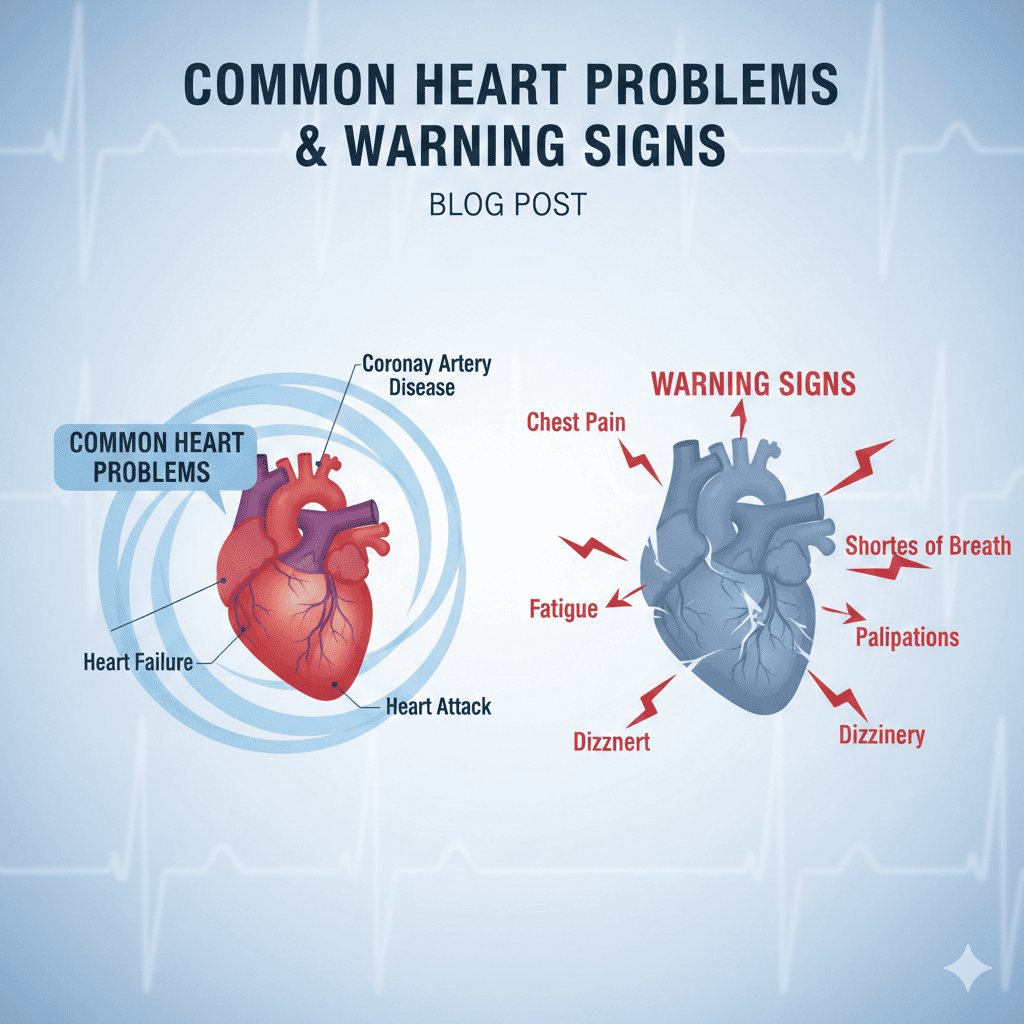
Most heart issues begin with mild and subtle symptoms. Chest discomfort is the most common sign—it may feel like pressure, tightness, heaviness, or squeezing pain in the center of the chest. Shortness of breath during normal activity or while resting indicates the heart is struggling to pump blood effectively. Other warning signs include fatigue, swelling in the legs, ankles, and feet due to fluid retention, dizziness, light-headedness, and irregular heartbeat (palpitations). Pain spreading to the left arm, jaw, back, or neck could be a sign of a heart attack and requires immediate medical attention. Ignoring these symptoms may lead to severe complications in the long run.
Common Heart Problems
There are several types of heart issues that affect people of all ages. Coronary artery disease is the most common—it occurs when arteries become narrow or blocked due to cholesterol deposits. Heart attack happens when blood flow to the heart muscle is suddenly cut off. Heart failure occurs when the heart becomes too weak or stiff to pump blood efficiently. Arrhythmias refer to irregular heartbeat patterns that may feel like fluttering or skipping beats. Valve diseases occur when heart valves do not open or close properly. High blood pressure also puts excessive strain on the heart, increasing the risk of severe complications.
Major Causes of Heart Problems
Several lifestyle and medical factors increase the risk of developing heart diseases. High blood pressure and high cholesterol damage the arteries over time. Diabetes affects the blood vessels and accelerates heart-related problems. Smoking, alcohol consumption, lack of physical activity, and poor diet significantly increase the chances of heart issues. Obesity forces the heart to work harder, while stress and lack of sleep weaken heart function. Genetics also play an important role—if your parents or siblings have a history of heart disease, your risk increases.
Prevention and Heart Care Tips
Prevention is the best way to reduce your chances of heart disease. Start by maintaining a healthy diet rich in vegetables, whole grains, fruits, nuts, and lean proteins. Avoid sugary drinks, oily foods, excessive salt, and processed snacks. Engage in regular physical activity such as brisk walking, cycling, dancing, yoga, or swimming for at least 30 minutes daily. Quit smoking immediately and reduce alcohol intake. Manage stress through meditation, deep breathing, hobbies, and good sleep habits. Regular health checkups help monitor cholesterol, blood pressure, and sugar levels, ensuring early detection and treatment.
When to See a Doctor
You should consult a doctor if you experience symptoms like persistent chest pain, shortness of breath, swelling in the legs, rapid heartbeat, or dizziness. Seek emergency medical help if you notice sudden chest pain, pain radiating to your arm or jaw, severe shortness of breath, or sudden fainting. Early medical attention prevents serious complications and improves treatment outcomes. Never ignore any unusual signs related to your heart health.
Conclusion
Heart diseases can be life-threatening, but with the right knowledge and lifestyle changes, you can significantly reduce your risk. Paying attention to early symptoms, managing stress, eating a healthy diet, and staying active are key to maintaining good heart health. Regular checkups and timely medical care help ensure your heart remains strong and healthy. Prioritize your heart today—small steps lead to a healthier and happier life.